How to Choose a Blush Color in Natural Light
A blush that looks bright in the pan can all but disappear once blended. Try one shade on each cheek by a window, then step back to see which color you can still pick out.
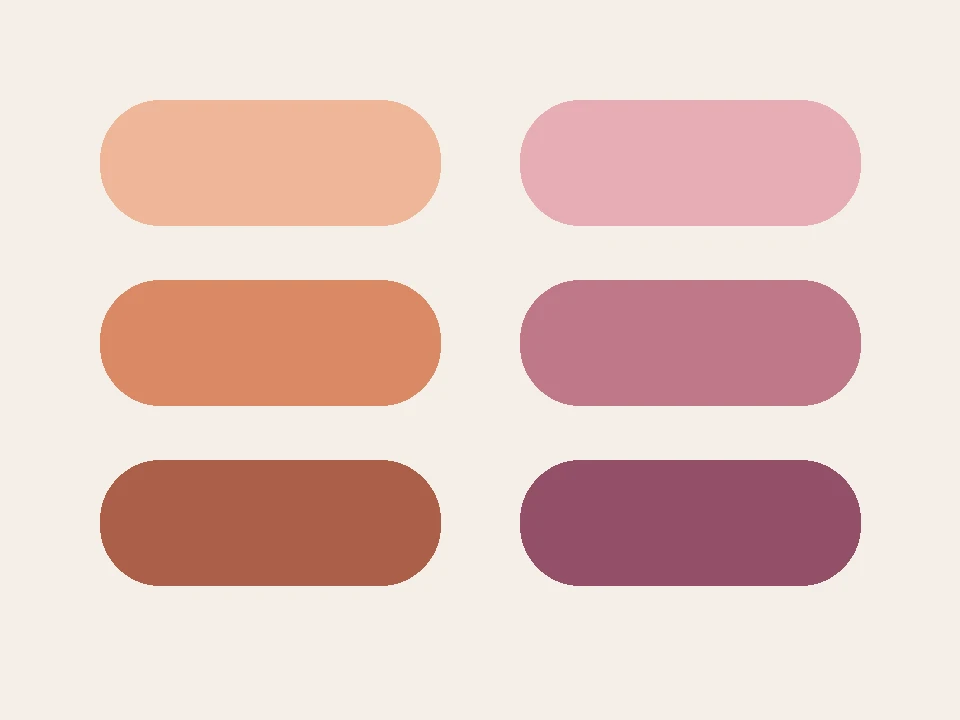
Peaches on the left, roses on the right. Use the swatches to pick a pair to try on your skin.
Choose two shades that answer one question
To compare peach with rose, choose two blushes with similar textures and finishes. A pearly peach next to a matte rose makes it hard to tell whether you prefer the color or the sheen. To compare depth instead, put a soft pink beside a deeper rose in the same finish.
Give both cheeks the same light
Face a window with indirect daylight and place the mirror in front of you. Switch off a nearby vanity bulb if it casts a second color across your face. Wear the foundation you normally use, or leave skin bare if that is how you usually wear blush.
Look again after blending
Use separate clean brushes or two clean sides of a sponge. Apply a light layer to the same spot on each cheek and blend across a similar area. Take one step back. See which shade stays visible and which melts into the rest of your makeup. Pick the effect you actually want to wear.
Adjust depth before buying a different color family
If a pale pink leaves a dusty cast but very little pink, try a deeper rose with a light hand. If a bright coral draws more attention than you want, compare it with a muted peach. Check the winner once more under the light where you expect to spend your day.
How to File Your Nails Into a Soft, Even Curve
Source · U.S. Department of Energy · LED Color Characteristics