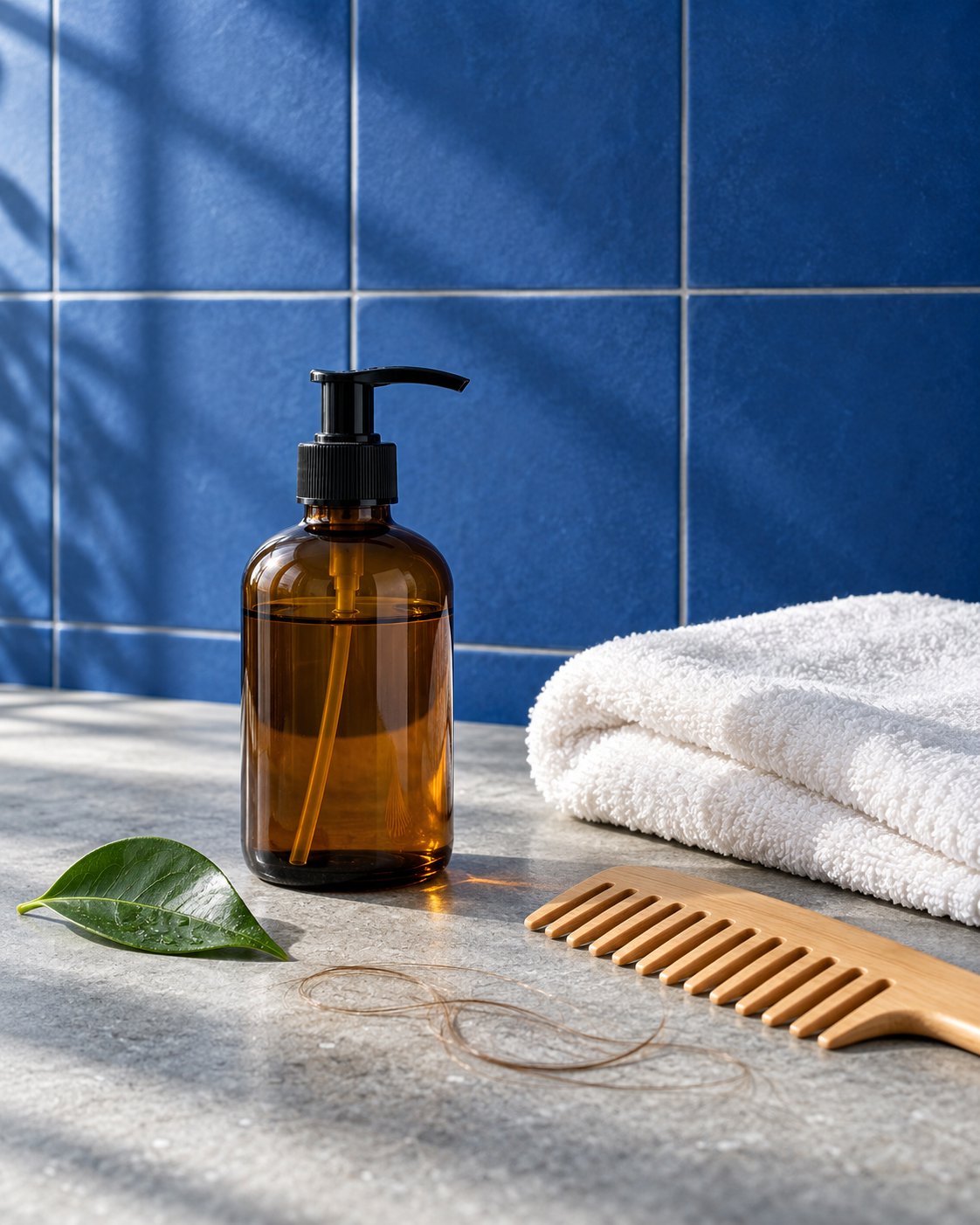
Fine hair describes the diameter of an individual strand. Thin hair usually describes low density: fewer strands growing in a given area of scalp. You can have fine strands packed closely together, or coarse strands spaced farther apart.
Think about one strand, then the whole head
Look at a naturally shed strand on a contrasting surface. A slender strand can be difficult to see or feel on its own. That tells you something about the fiber. It tells you very little about how many strands grow beside it.
Density concerns the group. Picture two paintbrushes filled with equally fine bristles: one has a few rows, the other has dozens. The bristles have the same diameter, but the brushes hold different amounts of material. Hair texture and density can vary independently in much the same way.
Which detail matters when buying conditioner?
If each strand is fine but you have a lot of hair, you may need several sections to distribute a lightweight rinse-out conditioner evenly. Spread a little at a time through the ends. One large dollop on the top layer can leave some ends untouched and others coated.
If your strands feel coarse but your overall density is low, choose the texture according to how your ends feel. Start with a small total amount because there is less hair to cover. A rich product and a large dose are two different choices.
Can I tell from a ponytail or a photo?
A ponytail combines strand width, density, layers and haircut length. It cannot separate them. Wet hair clumps and overhead light can make a part look wider, so a shower selfie is a poor guide to density. If you want a haircut that shows more fullness, take your stylist a photo of how your hair sits when it is dry and styled as usual.
When the question is about a change
Hair that has always been fine is different from a part that has recently widened or a new patch of shedding. A dermatologist can assess a change over time. For everyday washing and conditioning, see the American Academy of Dermatology’s hair-care guidance.